clean fuels

Farmers Continue To See Value From Industry They Built

America’s soybean farmers didn’t just adopt biodiesel—they helped create the industry. Through soybean checkoff investments spanning more than three decades, farmers funded the research, fuel testing, engine validation, market development, and policy efforts that transformed biodiesel from an emerging technology into a cornerstone of the nation’s renewable fuels industry. Today, those investments continue to pay

Farmers Continue To See Value From Industry They Built Read More »

USDA Finalizes Regenerative Agriculture Guidelines for Biofuel Feedstocks

The U.S. Department of Agriculture (USDA) has finalized new technical guidelines designed to help farmers quantify and document greenhouse gas emission reductions associated with regenerative agricultural practices used to grow biofuel feedstocks. Alongside the final guidelines, USDA also released an updated version of its Feedstock Carbon Intensity Calculator, a tool that allows farmers to estimate

USDA Finalizes Regenerative Agriculture Guidelines for Biofuel Feedstocks Read More »

Building a Stronger Biofuel Supply Network in Michigan Through Greater Education and Transparency

Expanding access to biodiesel and other advanced biofuels, such as renewable diesel and sustainable aviation fuel (SAF), starts with stronger connections across the supply chain. This week, the Michigan Advanced Biofuels Coalition (MiABC) brought producers, fuel distributors, fleet operators, and industry partners together at ZFS Ithaca for its inaugural stakeholder meeting to discuss opportunities to

Building a Stronger Biofuel Supply Network in Michigan Through Greater Education and Transparency Read More »

MiABC Hosts Inaugural Stakeholder Meeting at ZFS Ithaca

The Michigan Advanced Biofuels Coalition (MiABC) recently welcomed stakeholders from across the state to its inaugural stakeholder meeting at ZFS Ithaca, Michigan’s largest soybean processing facility. The event brought together representatives from agriculture, renewable fuels, fleet operations, and industry to strengthen partnerships while highlighting the critical role Michigan soybeans play in advancing the state’s bioeconomy.

MiABC Hosts Inaugural Stakeholder Meeting at ZFS Ithaca Read More »

FarmDoc Daily: Impact of Final RVOs on Projected Biomass-Based Diesel Feedstock Use for 2026-2027

The U.S. Environmental Protection Agency (EPA) finalized the “Set 2” rule at the end of March, establishing Renewable Volume Obligations (RVOs) under the Renewable Fuel Standard (RFS) for 2026 and 2027 that are unprecedented in the history of the program (farmdoc daily, April 16, 2026).  We have been working through the implications of these historic RVOs

FarmDoc Daily: Impact of Final RVOs on Projected Biomass-Based Diesel Feedstock Use for 2026-2027 Read More »

Farmer Experiences Smooth Planting Season with B5 Biodiesel in the Tank

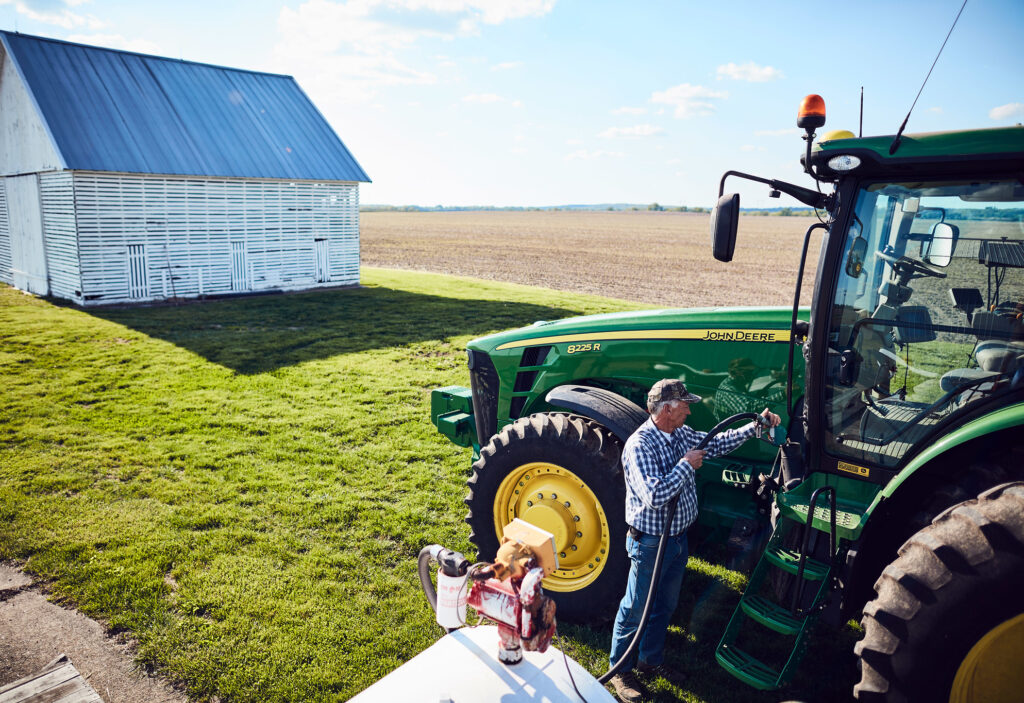
This article continues Zach Schaffner’s biodiesel journey from tank cleaning through planting.  Read the first article in the series here. Blessed with a stretch of clear weather for timely planting, followed by much-needed rains, Zach Schaffner’s 2026 crops got off to a great start.  Another plus for this planting season: The Michigan farmer had a

Farmer Experiences Smooth Planting Season with B5 Biodiesel in the Tank Read More »

Norwegian Cruise Line Expands Renewable Fuel Efforts While Advancing Sustainability Goals

Norwegian Cruise Line Holdings Ltd. (NCLH) has released its 2025 Sail & Sustain report, highlighting progress across a range of environmental, social, and governance initiatives, including expanded use of renewable fuels and shore power technology throughout its fleet. The report details advancements made under the company’s five-pillar sustainability framework, which focuses on environmental stewardship, safety,

Norwegian Cruise Line Expands Renewable Fuel Efforts While Advancing Sustainability Goals Read More »

Record Biofuel Growth Expected as EPA Increases Renewable Fuel Requirements

The U.S. biofuels sector has experienced a significant improvement in market conditions during 2026, driven by stronger Renewable Fuel Standard (RFS) requirements, elevated petroleum fuel prices, and growing demand for low-carbon transportation fuels. One of the clearest indicators of this shift has been the rapid increase in Renewable Identification Number (RIN) values. RINs are compliance

Record Biofuel Growth Expected as EPA Increases Renewable Fuel Requirements Read More »

ISCC Launches 60-Day Public Comment Period on Draft Book-and-Claim Systems for SAF

The International Sustainability and Carbon Certification (ISCC) has launched a 60-day public consultation on a draft guidance document outlining how book-and-claim systems could be applied within sustainable aviation fuel (SAF) markets. The proposed guidance establishes a framework for managing sustainability attributes associated with SAF, including requirements for their creation, transfer, allocation, verification, and retirement. The

ISCC Launches 60-Day Public Comment Period on Draft Book-and-Claim Systems for SAF Read More »

Michigan EGLE Offering Fuel Transformation Program Funds

The Michigan Department of Environment, Great Lakes, and Energy (EGLE) has opened the Fiscal Year 2026 Fuel Transformation Program (FTP), making up to $28 million available to reduce emissions from diesel-powered vehicles, engines, vessels, and equipment operating in Michigan. The program supports Michigan’s efforts to improve air quality, reduce greenhouse gas emissions, and modernize transportation and equipment

Michigan EGLE Offering Fuel Transformation Program Funds Read More »

Scroll to Top