
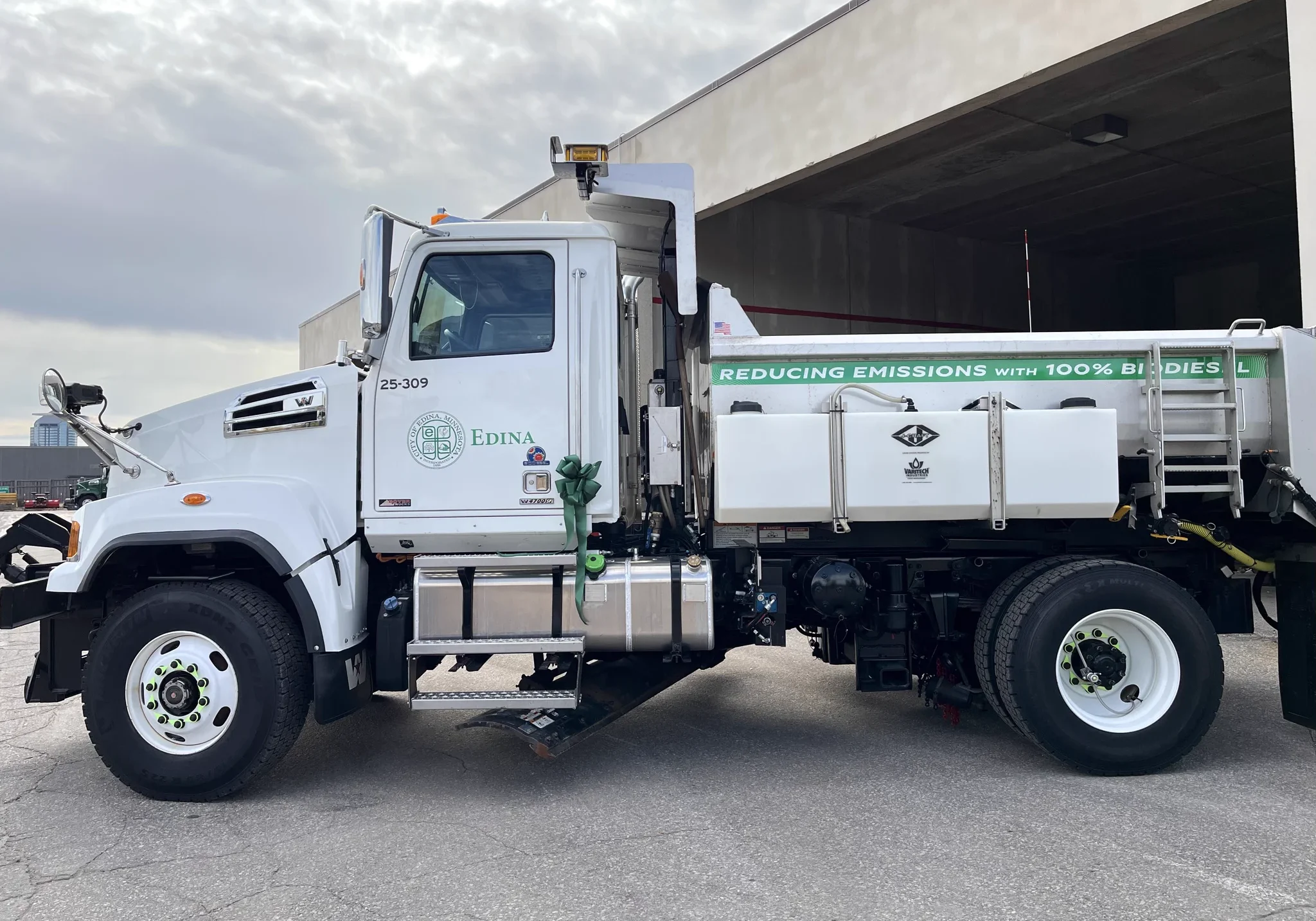
Edina converts 10 existing snowplows and dump trucks to 100% biodiesel, demonstrating a practical approach to reducing emissions while supporting Minnesota farmers.
The City of Edina, Minnesota, celebrated a milestone in cleaner transportation on October 8, 2026, unveiling the state’s first municipal fleet and dedicated fueling system designed for 100% biodiesel (B100). The project demonstrates how municipalities can reduce greenhouse gas emissions from existing heavy-duty vehicles while maintaining essential public services and supporting local agriculture.
During a ribbon-cutting ceremony at the city’s Public Works and Park Maintenance Facility, Edina showcased 10 existing Western Star dump trucks and snowplows equipped with Optimus Technologies’ Vector System, which enables the vehicles to operate on B100, including during Minnesota’s colder months.
Rather than replacing serviceable vehicles with new equipment, Edina invested in technology that allows its existing fleet to use a cleaner, domestically produced fuel. The approach offers a potential model for other municipalities seeking near-term emissions reductions without the substantial capital investment associated with replacing heavy-duty vehicles.
Putting B100 to Work in Minnesota’s Climate
One of the primary challenges associated with using high biodiesel blends in northern climates is fuel performance during cold weather. Biodiesel has different cold-flow properties than petroleum diesel, requiring additional considerations for storage, handling and vehicle operation.
Optimus Technologies’ Vector System addresses these challenges through specialized vehicle technology that enables compatible diesel engines to operate on B100. The city’s new biodiesel storage and dispensing infrastructure, supplied by Benecor Inc., further supports reliable fueling operations.
According to Optimus Technologies, the 10 converted vehicles are Western Star trucks. The company highlighted the project as an example of how municipalities can reduce their carbon footprint while keeping existing heavy-duty vehicles in service.
The project is particularly significant for snowplows and dump trucks, which perform demanding work and must remain operational during winter weather and other critical public works activities.
Supporting Minnesota Farmers and Cleaner Air
The biodiesel used by Edina is produced in Minnesota from locally grown soybeans, connecting the city’s transportation investments with the state’s agricultural economy.
By replacing petroleum diesel with B100, Edina expects to significantly reduce lifecycle greenhouse gas emissions. The project has been associated with potential emissions reductions of up to 74%, although actual results depend on fuel production pathways, operating conditions and the emissions being measured.
Biodiesel can also reduce certain harmful tailpipe pollutants, including particulate matter, hydrocarbons and carbon monoxide, compared with petroleum diesel. These benefits are particularly relevant for municipal vehicles operating in neighborhoods, near public facilities and along heavily traveled streets.
“This project directly invests in Minnesota’s farmers and makes our air cleaner because we’re not emitting pollutants from these trucks,” said Matthew Gabb, sustainability specialist for the City of Edina, in the city’s September 22 announcement. “It’s a win-win project that benefits multiple sectors statewide.”
More Than $546,000 in External Funding
The project was developed over approximately two and a half years through collaboration among Edina’s Sustainability Division, Facilities and Fleet Division, and Public Works Department.
More than $546,000 in external grants and funding supported the initiative, including contributions from:
- USDA’s Higher Blends Infrastructure Incentive Program.
- Minnesota’s State Competitiveness Fund.
- U.S. Department of Energy’s Energy Efficiency and Conservation Block Grant Program.
- Minnesota Pollution Control Agency’s Local Climate Action Grant Program.
- Minnesota Soybean Research & Promotion Council.
The USDA awarded $163,000 to support the installation of B100 fueling infrastructure, with the project originally projected to increase biodiesel use by approximately 20,900 gallons annually.
These investments helped Edina establish the infrastructure and vehicle capabilities necessary to incorporate B100 into its municipal operations.
Removing Barriers for Other Fleets
Edina’s achievement comes as Minnesota is taking additional steps to make B100 more accessible to public and private fleets.
On October 6, the Minnesota Soybean Growers Association highlighted a new Biodiesel Fire Code Variance Toolkit developed by the Minnesota Department of Public Safety State Fire Marshal in collaboration with the Minnesota departments of Agriculture, Transportation and Administration.
The toolkit is intended to help fleet operators navigate fire code requirements associated with storing and dispensing biodiesel blends above B20, addressing a regulatory challenge that can complicate B100 infrastructure projects.
“B100 biodiesel is a creative solution to a common challenge other agencies are facing — how do we reduce emissions from heavy-duty fleet vehicles while maintaining service levels and doing it cost-effectively?” said Marisa Bayer, Edina’s sustainability manager, in the Minnesota Soybean Growers Association’s October 6 announcement.
Bayer explained that Edina focused on 10 of its higher diesel-consuming vehicles to create opportunities to reduce petroleum diesel consumption, lower emissions and potentially reduce fuel costs. She also emphasized that the toolkit could help other fleet operators navigate the regulatory hurdles Edina encountered during implementation.
A Model for Municipal Fleet Decarbonization
Edina’s B100 initiative supports its Climate Action Plan, adopted in 2021, which calls for a 45% reduction in greenhouse gas emissions by 2030 and net-zero emissions by 2050.
The project also illustrates the role that renewable fuels can play alongside other clean transportation technologies. For municipalities with demanding heavy-duty applications, particularly snow removal and public works operations, B100 offers another pathway to reduce petroleum consumption and emissions while retaining existing vehicles.
“We want to demonstrate that it’s a feasible, scalable solution that other cities and agencies can adopt,” Bayer said in the city’s September 22 announcement.
With its new fueling infrastructure, converted vehicles and experience navigating regulatory requirements, Edina is helping establish a model that other municipalities can evaluate as they pursue their own air quality, climate and energy goals.
The project reinforces an important opportunity for public fleets: cleaner transportation does not always require replacing existing equipment. In some applications, investing in renewable fuels and compatible technology can deliver meaningful emissions reductions while extending the useful life of vehicles already in service.