
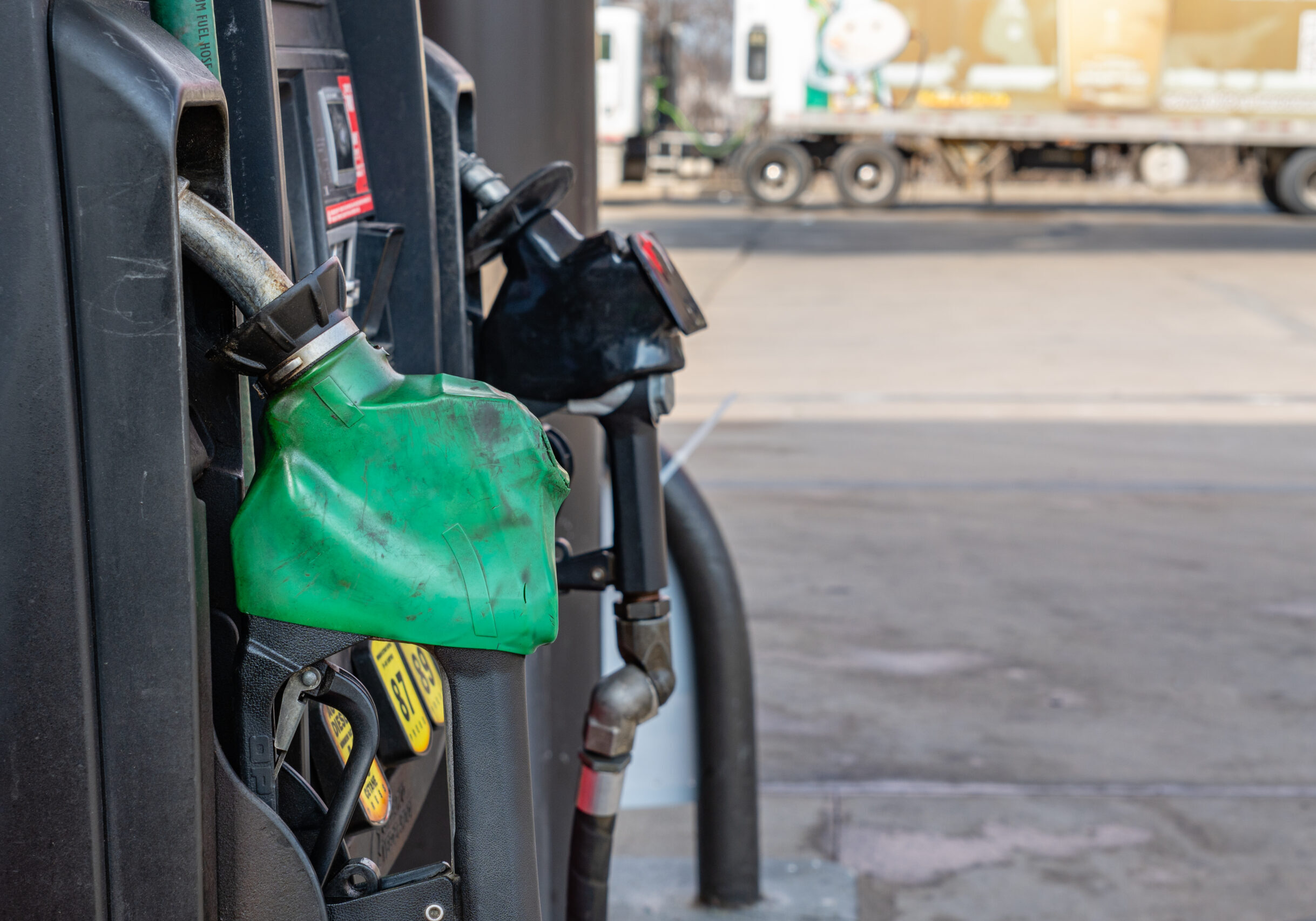
New Emissions Value Request process provides a pathway for producers of biodiesel, renewable diesel, sustainable aviation fuel, and other qualifying transportation fuels not covered by existing federal emissions rate tables.
The U.S. Department of Energy (DOE) announced a new process on October 14, 2026, to help clean fuel producers determine their eligibility for the Section 45Z Clean Fuel Production Tax Credit when their fuel type, feedstock, or production pathway is not included in existing federal emissions rate tables.
The Emissions Value Request (EVR) process, administered by DOE’s Alternative Fuels and Feedstocks Office, allows producers to obtain a lifecycle greenhouse gas emissions value for qualifying transportation fuels. That value can then be used to petition the U.S. Department of the Treasury for a provisional emissions rate (PER), an important step toward claiming the federal tax credit.
The announcement provides an additional pathway for producers of biodiesel, renewable diesel, sustainable aviation fuel (SAF), ethanol, and other qualifying fuels whose production methods are not adequately represented in the government’s existing emissions calculations.
Expanding Access to the 45Z Tax Credit
Established under the Inflation Reduction Act of 2022 and subsequently modified and extended through federal legislation enacted in July 2025, Section 45Z provides a federal tax incentive for producing qualifying transportation fuels with lower lifecycle greenhouse gas emissions.
Unlike previous federal biofuel incentives based primarily on production volumes, the value of the 45Z credit is tied to a fuel’s lifecycle greenhouse gas emissions performance. This approach considers emissions associated with feedstock production, transportation, fuel manufacturing, and other stages of the fuel’s lifecycle.
To determine the credit value, producers generally rely on emissions rates established by the Treasury Department and IRS, using approved methodologies such as the 45ZCF-GREET model.
However, not every fuel type, feedstock, or production pathway is represented in the applicable emissions rate tables. This has created uncertainty for some producers seeking to establish their fuel’s emissions performance and qualify for the incentive.
The new EVR process addresses that gap by providing a formal mechanism for obtaining a DOE-calculated emissions value for qualifying pathways not already covered.
How the New Process Works
Under the guidance, producers whose fuel type, primary feedstock, or production pathway is not included in the applicable emissions rate table may submit an application to DOE requesting an emissions value.
Applicants must provide technical documentation describing their production process, including engineering analyses consistent with a front-end engineering and design (FEED) study and an Association for the Advancement of Cost Engineering Class 3 cost estimate.
The documentation must contain sufficient detail for DOE to evaluate the energy and material inputs, outputs, and emissions associated with the proposed fuel production pathway.
Once DOE determines an emissions value, the producer can use that information to petition the Treasury Department for a provisional emissions rate.
Importantly, receiving an emissions value from DOE does not automatically qualify a producer for the 45Z credit. The Treasury Department and IRS remain responsible for determining the provisional emissions rate and administering tax credit eligibility.
DOE also indicated that it will not review certain applications that fall outside the scope of the process, including requests challenging background data already associated with established fuel pathways.
Supporting Domestic Fuel Production and Agriculture
The administration described the new guidance as part of its broader effort to strengthen domestic energy production and expand opportunities for American agriculture.
In its October 14 announcement, DOE emphasized the role of the 45Z credit in supporting fuel production using eligible feedstocks from the United States, Mexico, and Canada.
The policy has important implications for agricultural feedstocks, including soybean oil and other renewable resources used to produce biodiesel, renewable diesel, and SAF.
Greater clarity around emissions calculations could help qualifying producers evaluate new production technologies, feedstocks, and facility investments while providing additional opportunities to demonstrate the greenhouse gas benefits of their fuels.
Industry Welcomes Additional Clarity
The Renewable Fuels Association (RFA), which represents the U.S. ethanol industry, welcomed the announcement as a step toward providing greater certainty for producers navigating the 45Z tax credit.
According to industry reporting accompanying the DOE announcement, RFA Vice President for Strategy and Innovation Tad Hepner said the association would continue working with DOE to refine the process to better accommodate existing commercial ethanol facilities.
The announcement comes as renewable fuel producers continue adapting to the transition from previous federal biofuel incentives to the emissions-based 45Z framework.
For producers evaluating new feedstocks and production technologies, the ability to establish an emissions value for previously unlisted pathways could support future investment and commercialization decisions.
What Comes Next
DOE has published application instructions and supporting materials outlining the technical information required to request an emissions value.
Producers interested in submitting an application must first email 45ZEmissionsRequest@doe.gov with their organization’s name and a statement of intent to submit an Emissions Value Request Application. DOE will then provide access to a secure platform for submitting the required documentation.
The new process represents another step in implementing the 45Z tax credit and establishing a framework for evaluating additional clean fuel production pathways.
For the advanced biofuels industry, greater regulatory clarity could help producers make informed investment decisions, expand the use of domestically sourced renewable feedstocks, and support continued development of lower-carbon transportation fuels.
Additional information: The DOE’s official 45Z Emissions Value Request webpage provides application instructions, documentation requirements, and additional guidance for interested producers.