
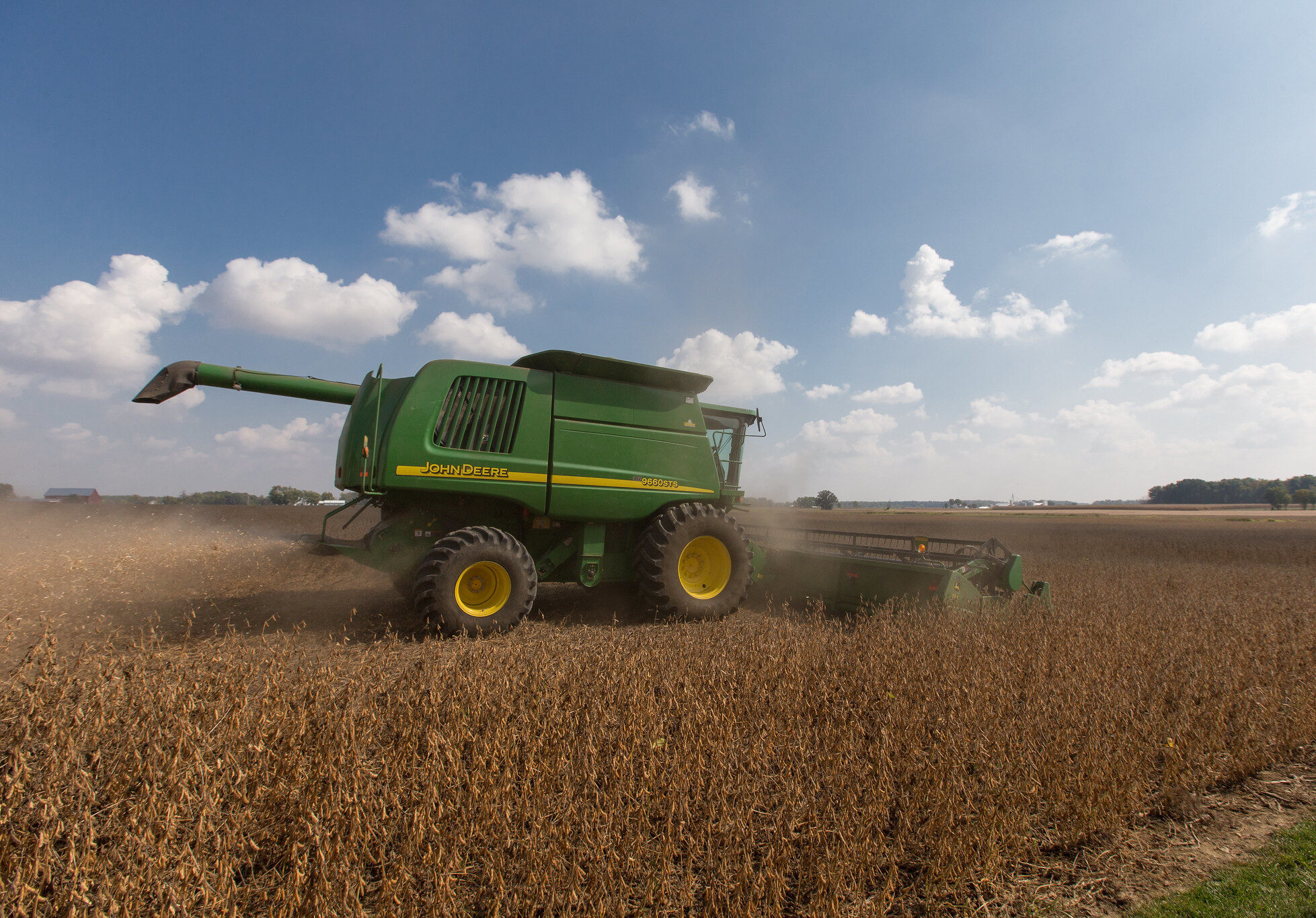
American farmers have long played an important role in the growth of the biodiesel industry. Now, changes to the federal 45Z Clean Fuel Production Credit are creating new opportunities to recognize how decisions made on the farm can influence the lifecycle carbon intensity of the fuels produced from agricultural feedstocks.
At the same time, farmers can take another step toward reducing emissions by using biodiesel in the diesel equipment that makes modern agriculture possible.
Together, these opportunities highlight an increasingly important connection between how crops are grown, how farms are powered, and how agricultural products can contribute to lower-carbon transportation.
45Z Brings the Farm Into the Carbon-Intensity Equation
Unlike traditional volumetric biofuel incentives, the 45Z Clean Fuel Production Credit ties the value of the credit to a fuel’s lifecycle greenhouse gas emissions. In general, fuels with lower qualifying emissions rates can generate greater credit value.
New federal guidance issued in September 2026 allows qualifying low-carbon agricultural practices to be reflected in emissions calculations for agricultural feedstocks, consistent with USDA technical guidelines and the 45Z-specific Feedstock Carbon Intensity Calculator.
That means what happens before a soybean ever reaches a biodiesel plant can matter.
Practices recognized through the developing 45Z framework can include approaches such as reduced or no-till farming, cover crops, and nutrient management. Accounting for these practices creates a stronger connection between agricultural production and the lifecycle carbon intensity of the resulting fuel.
For soybean farmers, that presents an opportunity for practices already being implemented on farms to potentially contribute to a lower carbon-intensity score for soybean-based fuels.
Taking Emissions Reductions One Step Further
There is another piece of the equation that farmers can influence: the fuel used to operate the farm.
Diesel engines remain essential to American agriculture, powering tractors, combines, trucks, irrigation equipment, and other machinery. Biodiesel provides an opportunity to reduce the lifecycle greenhouse gas emissions associated with that fuel use while utilizing much of the equipment farms already depend on.
For soybean farmers in particular, the connection is difficult to overlook.
Soybeans are grown and harvested. Soybean meal provides an important source of protein for livestock and other markets, while soybean oil can serve as a feedstock for biodiesel. That biodiesel can then return to farms as a lower-carbon fuel for diesel-powered equipment.
It’s a farm-to-fuel-to-farm cycle that demonstrates how agriculture can contribute to emissions reductions at multiple points in the supply chain.
A More Complete Picture of Lower-Carbon Agriculture
The evolution of 45Z also reflects a broader shift in how emissions are measured.
Rather than looking exclusively at the finished gallon of fuel, lifecycle analysis considers emissions associated with producing the feedstock, converting it into fuel, transporting it, and ultimately using it.
Recognizing qualifying agricultural practices can provide a more detailed picture of the differences between individual agricultural supply chains.
For farmers, this also reinforces the importance of documenting practices and understanding how farm-level data may ultimately connect with biofuel markets.
And while 45Z is a tax credit for qualifying clean-fuel producers—not a credit farmers receive simply for using biodiesel—the carbon intensity of agricultural feedstocks can influence the emissions calculations used to determine the value of qualifying fuel.
Closing the Loop
The connection between agriculture and biodiesel has always extended beyond simply supplying a feedstock. Farmers are part of the fuel’s lifecycle.
As carbon-intensity-based markets continue to develop, the practices used to grow crops may become increasingly important to the value of the fuels produced from them. Pairing those practices with greater use of biodiesel on the farm provides an opportunity to address emissions from both sides of the equation.
A soybean crop grown using practices that reduce its carbon intensity can help produce a lower-carbon fuel. That fuel can then return to the agricultural sector and help reduce emissions from the equipment used to plant, manage, and harvest the next crop.
From the field to the fuel tank—and back to the field—biodiesel provides an opportunity for American agriculture to play an increasingly integrated role in lower-carbon transportation.