
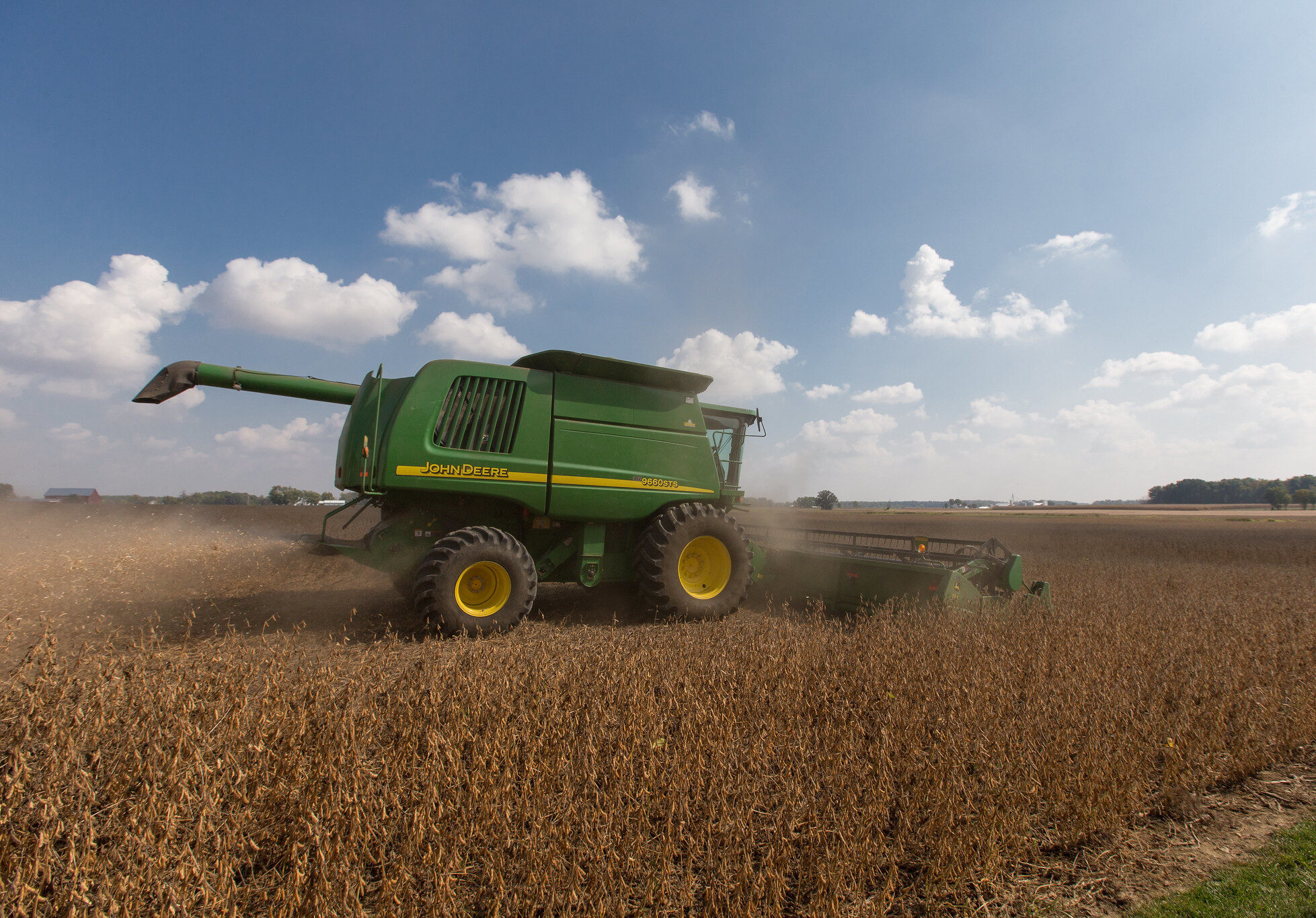
You’ve likely seen headlines about corn growers ramping up efforts to expand ethanol use in 2026. But soybean farmers are just as focused—and arguably facing an even bigger moment—as they work to grow demand for biodiesel, renewable diesel, and sustainable aviation fuel (SAF).
“We are certainly working every day on both fuels demand and opportunities,” says American Soybean Association President Caleb Ragland, a farmer from Magnolia, Kentucky.
Ragland points out that the opportunity set for soybeans is broader than ever. “Whether it be biodiesel, renewable diesel—there are opportunities with SAF (sustainable aviation fuel), and there are different feedstocks that can be used in SAF,” he explains. “As the saying goes, ‘A rising tide lifts all boats,’ and biofuels are such an exciting opportunity for the soybean industry that we must be pursuing.”
That pursuit now turns squarely to Washington. Ragland says soybean leaders are urging lawmakers to provide the certainty the industry needs in 2026 by finalizing key policies that will shape long-term investment and production decisions.
“We have opportunities right now that need to be completed by Congress,” Ragland says. “We have the 45Z tax credit that’s hanging out there that needs to be done. We have the Renewable Volume Obligations (RVOs) that need to be completed. That number has been debated and beaten to death. It’s time to get the deal done.”
He adds that finalizing 45Z and setting strong, clear Renewable Volume Obligations would deliver stability to farmers, crushers, biofuel producers, and fleets alike. “We need Congress to step up and make it happen. That’s good for demand, and it brings stability and certainty to our industry—something we desperately need.”
Why This Matters in Michigan
For Michigan, this isn’t theoretical. The state is home to two biodiesel production facilities: W2Fuel in Adrian and Thumb BioEnergy in Sandusky. Together, these facilities produce roughly 15 million gallons of biodiesel annually—supporting local jobs, creating in-state markets for soybean oil, and strengthening rural economies.
And the impact goes beyond plant gates. Increased biodiesel and renewable diesel demand supports soybean crush capacity, improves basis opportunities for growers, and keeps more of the energy value chain domestic. Every gallon produced helps reduce lifecycle greenhouse gas emissions compared to petroleum diesel while enhancing fuel lubricity and supporting energy security.
Ragland emphasizes that expanding biodiesel truly creates a win across the board. “The American farmer is growing a product that is getting used here domestically,” he says. “It’s creating fuel that is good for the environment. It’s good for the economy. It brings jobs. It brings economic opportunity to our farms, which ties back to economic opportunity for all of our rural communities.”
He notes that farm dollars circulate locally—often turning over six to eight times in rural communities—supporting small businesses, equipment dealers, truckers, processors, and Main Street storefronts. In short, expanding biodiesel and other soy-based fuels isn’t just about energy policy. It’s about farm stability, rural investment, domestic manufacturing, and cleaner air.
For soybean growers in Michigan and across the country, 2026 isn’t just another policy year—it’s a pivotal one.
Adapted from a post originally shared by Michigan News Today. Image credit: Flickr – United Soybean Board
Notice: The Michigan Advanced Biofuels Coalition (MiABC) does not lobby or influence policy in any way. The policy interests of Michigan soybean farmers and biodiesel producers are supported by the Michigan Soybean Association and Clean Fuels Alliance America, respectively. This post is shared for educational purposes only.