
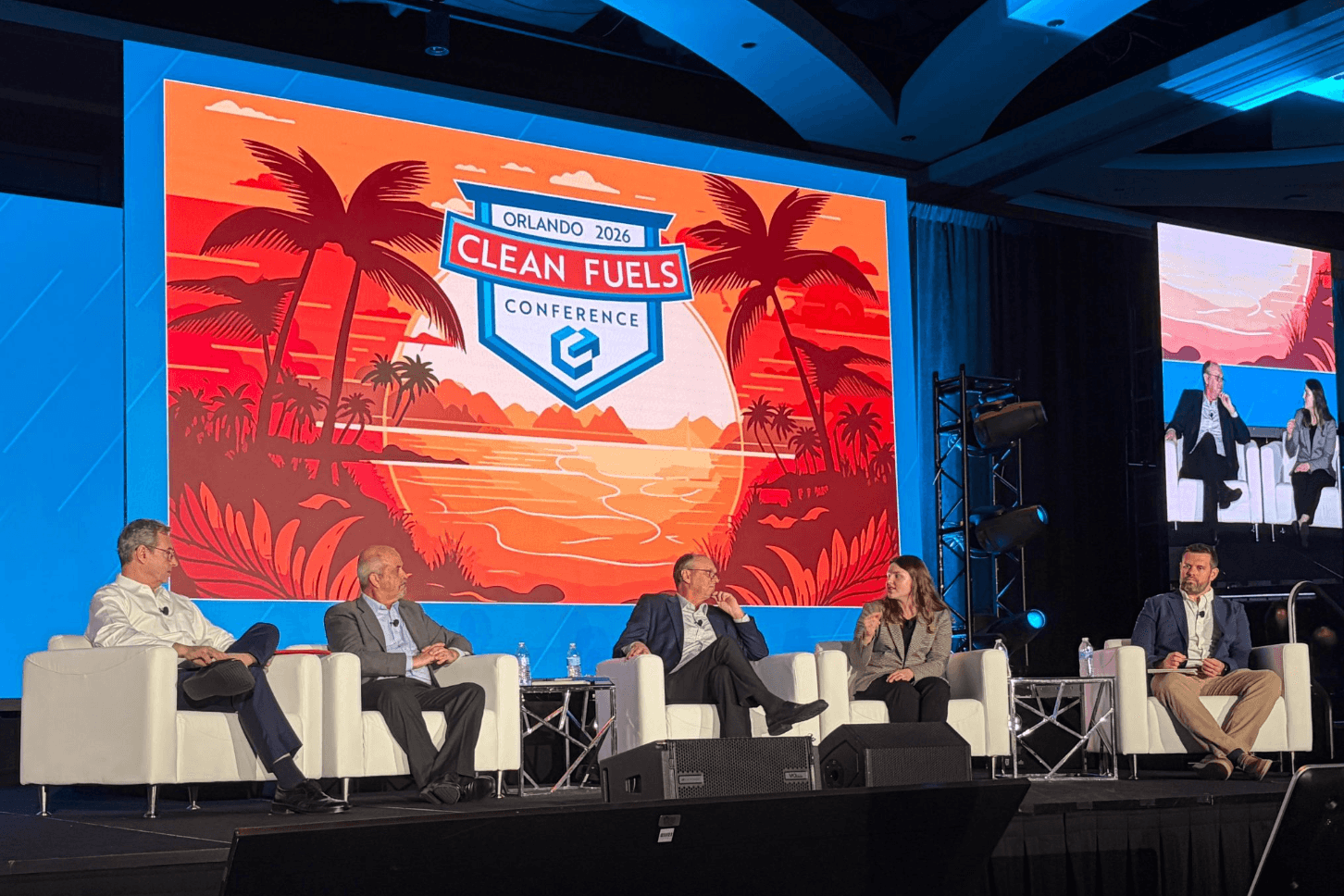
At this year’s Clean Fuels Conference, a standout session titled “Gonna Need a Bigger Boat: Navigating Marine Opportunities” took center stage — offering a forward-looking, pragmatic look at how biodiesel and renewable diesel are poised to become essential tools for cleaning up marine transportation.
Hosted by Clean Fuels Alliance America in support of its educational and outreach goals — which bring together producers, feedstock suppliers, fuel marketers, policy makers, fleet managers, farmers, and clean energy advocates from across the country — this session underscored that the maritime realm represents one of the next big frontiers in the clean fuels revolution.
Why the Marine Sector Matters
With over 7 billion gallons of fuel consumed annually in domestic marine operations alone, and even more globally, shipping and marine transport account for a sizeable share of transportation emissions. Against this backdrop, panelists made the case that biodiesel and renewable diesel — compatible with existing engines and distribution infrastructure — offer one of the most immediately deployable solutions for reducing greenhouse gases and particulate emissions on the water.
What makes these fuels especially compelling for ship operators is that they work with today’s powerplants — unlike other low-carbon alternatives that may require costly retrofits or new vessels. Operating in blends from B20 to higher concentrations, biodiesel can significantly reduce carbon intensity and pollutant emissions while supporting operational continuity.
Insights From the Panel
Moderated by leaders and featuring industry voices including representatives from Seaboard Marine, Energy and Environmental Research Associates (EERA), and MARC-IV Consulting (M4), the session drilled into:
- Policy drivers and regulatory forces shaping marine fuel choices, including international standards and U.S. policy trends that are increasing interest in lower-carbon pathways.
- Real-world adoption cases and forward momentum in ports and waterways — particularly in regions where stakeholders are aligning sustainability goals with economic opportunity.
- Supply chain realities and market readiness, emphasizing that clean fuels are not theoretical solutions but ready today to integrate into marine operations at scale.
Campbell — who also directs market development with the Michigan Soybean Committee — highlighted that biodiesel use on inland waterways and the Great Lakes is already gaining traction, complementing broader regional and national efforts to reduce emissions while bolstering demand for domestically produced biofuels.
Marine Momentum: What’s Already Happening
Across the Great Lakes region, initiatives like the Great Lakes Alliance for Sustainable Shipping (GLASS) are forging partnerships between farmers, shippers, logistics operators, and fuel providers to unlock both sustainability and economic opportunity. These collaborations are producing resources — from marine biodiesel guides to data on fueling infrastructure — that support wider biodiesel use in marine fleets.
Policy and industry shifts are also contributing to the sector’s rising interest in biodiesel:
- Federal fuel policies under the Renewable Fuel Standard and related credits are making clean fuels more competitive.
- State initiatives in regions like California and the Northeast are driving advanced fuel adoption in maritime, on-road, and beyond.
Shared Benefits for Climate, Communities, and Agriculture
What resonated throughout the session was the multidimensional value of marine biodiesel adoption:
- Environmental Impact: Lower greenhouse gas emissions and improved air quality in port communities.
- Economic Opportunity: Expanded demand for biodiesel supports rural economies and farmer profitability.
- Scalability: Unlike some emerging technologies, biodiesel and renewable diesel can be implemented now, using existing infrastructure and equipment.
It’s a message of both urgency and optimism — one that reflects broader themes at this year’s Clean Fuels Conference, where conversation spans clean fuels for land, sea, and sky and explores everything from feedstock challenges to global market trends.
Looking Ahead: All Tides Rise
The takeaway from “Gonna Need a Bigger Boat” was clear: marine decarbonization isn’t just a distant aspiration — it’s a present-day opportunity. With growing fuel supplies, supportive policy frameworks, and real-world case studies showing progress on the water, biodiesel and renewable diesel are proving they’re not just fit for land vehicles, but ready to power the ships of today and tomorrow.
When industry stakeholders work together — across transportation sectors and across regions — the entire clean fuels ecosystem benefits. And as the tide of interest continues to rise, the maritime industry may well become another key current driving biodiesel’s next wave of impact.
Adapted from the Clean Fuels Conference website and insights gained during the session by MiABC staff. Image Credit: Courtney Videchak, MARC-IV Consulting