
The supply of U.S. corn and soybeans has grown over the past decade and is projected to increase further in the coming years. In the past, large supplies have been partly absorbed by both export markets and biofuel production. However, going forward, exports are unlikely to grow sufficiently to offset projected supply increases. Instead, demand driven by changes in biofuel policies will be critical to absorbing increased corn and soybean availability and supporting prices for these crops.
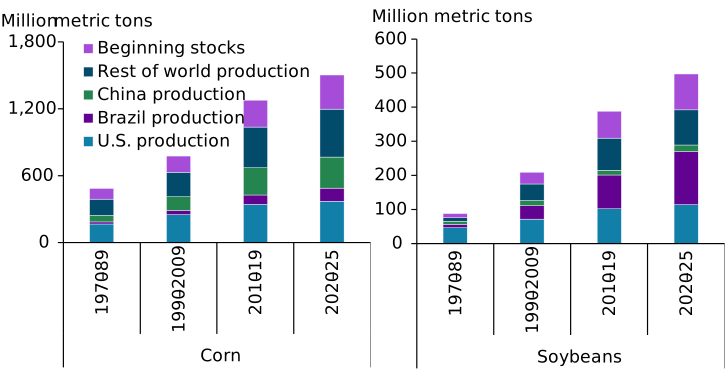
Productivity gains and larger planted areas worldwide have expanded corn and soybean supplies over time. The USDA projects that U.S. corn and soybean yields have risen more than 20 percent from 2010 to 2025, along with a 10 percent increase in corn acreage and a 2 percent increase in soybean acreage. Chart 1 shows that similar gains in productivity and acreage in net exporting countries, such as Brazil, and importing countries, such as China, have doubled global corn and soybean supplies over the past 30 years.
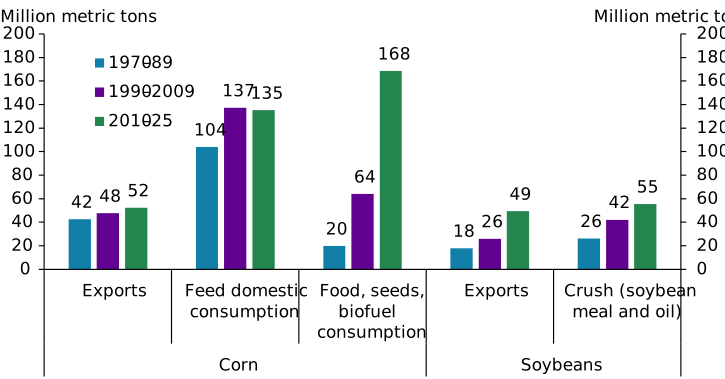
In the United States, expanding corn and soybean supplies have been partly absorbed by a greater use of crops for biofuel as well as rising exports. Chart 2 shows that over the past 30 years, the sharpest growth in corn demand has come from ethanol production. Much of this growth occurred after Congress passed the final version of the Renewable Fuel Standard (RFS) in 2007, which required gasoline and diesel refiners to acquire a quota of biofuels (Carter, Rausser, and Smith 2017; Lark and others 2022). The RFS and other subsidy programs that promote biofuels also boosted demand for soybean oil, a byproduct of soybean crushing used in biofuel production.[1] At the same time, increased exports helped absorb corn and soybean supplies. The right side of Chart 2 shows that average soybean exports doubled between the 1990–2009 period and the 2010–25 period as China’s demand for soybeans surged.
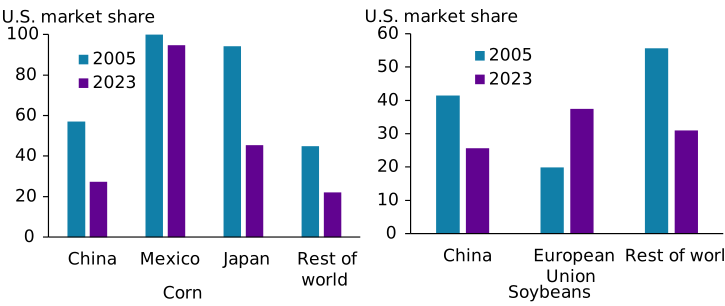
However, export demand is unlikely to grow enough to absorb the expected increase in crop supplies moving forward. Although the United States has expanded corn and soybean exports since the early 2000s and secured major trading partners such as Mexico, its overall share of global trade has declined (Chart 3). Improvements in infrastructure have allowed other exporters to capture large shares of key markets such as China, Japan, and the European Union. Brazil, for example, sharply increased soybean exports to China and has replaced the United States as China’s largest soybean source. Looking ahead, trade disputes and intensifying competition from other exporters could further limit export growth as a driver of U.S. crop demand (Adjemian, Smith, and He 2021; Steinbach, Yildirim, and Zurita 2024).
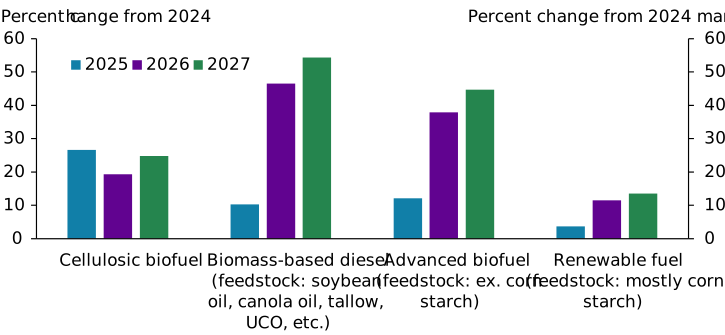
Instead, proposed changes to biofuel policy are likely to be the main driver of demand growth for corn and soybeans going forward. Chart 4 shows proposed changes to the RFS quotas for biomass-based diesel and advanced biofuel (which relies heavily on soybean oil) and renewable fuel (which uses corn ethanol), alongside other fuel types. If approved, the 2026–27 quota for biomass-based diesel would increase by 50 percent from its 2024 levels, while also increasing quotas for renewable fuel (corn ethanol) and advanced biofuels (biofuels other than corn ethanol with high greenhouse gas reductions). In addition, proposed changes to the RFS would count foreign inputs toward biofuel mandates at half the rate of North American inputs, boosting demand for domestic feedstock such as corn and soybeans. The Environmental Protection Agency (EPA) estimates that biodiesel producers would need, on average, an additional 250 million gallons per year to meet the RFS mandate—equivalent to more than 5 million metric tons of crushed soybeans, or roughly 4 percent of current U.S. soybean production (EPA 2025).[2]
Recent changes to the federal per-gallon income tax credit for clean fuel producers, known as the Clean Fuel Production Credit (45Z), will further encourage refineries and processors to use North American feedstock. The One Big Beautiful Bill Act (OBBBA) extended the 45Z provision through 2029. Only production using feedstock from the United States, Canada, or Mexico qualifies for the credit, which can reach up to $1 per gallon. In addition, the OBBBA adjusted calculations of the environmental benefits of biofuels to exclude indirect land-use penalties, which could favor crop producers and further boost demand.
In the past year, U.S. crop producers have faced tight profit opportunities amid an oversupply of crops relative to demand. Rising competition and recent trade disputes may further weaken export markets for corn and soybeans. However, biofuel production offers potential alternative sources of demand. Recent proposed and enacted federal biofuel policies are likely to create new demand for U.S. corn and soybean crops, partially absorbing production and supporting prices.
Download the original article from the Federal Reserve Bank of Kansas City.

Originally shared by the Federal Reserve Bank of Kansas City. Title updated for purpose. Image Credit: Pixabay – manfredrichter
Notice: The Michigan Advanced Biofuels Coalition (MiABC) does not lobby or influence policy in any way. The policy interests of Michigan soybean farmers and biodiesel producers are supported by the Michigan Soybean Association and Clean Fuels Alliance America, respectively. This post is shared for educational purposes only.