
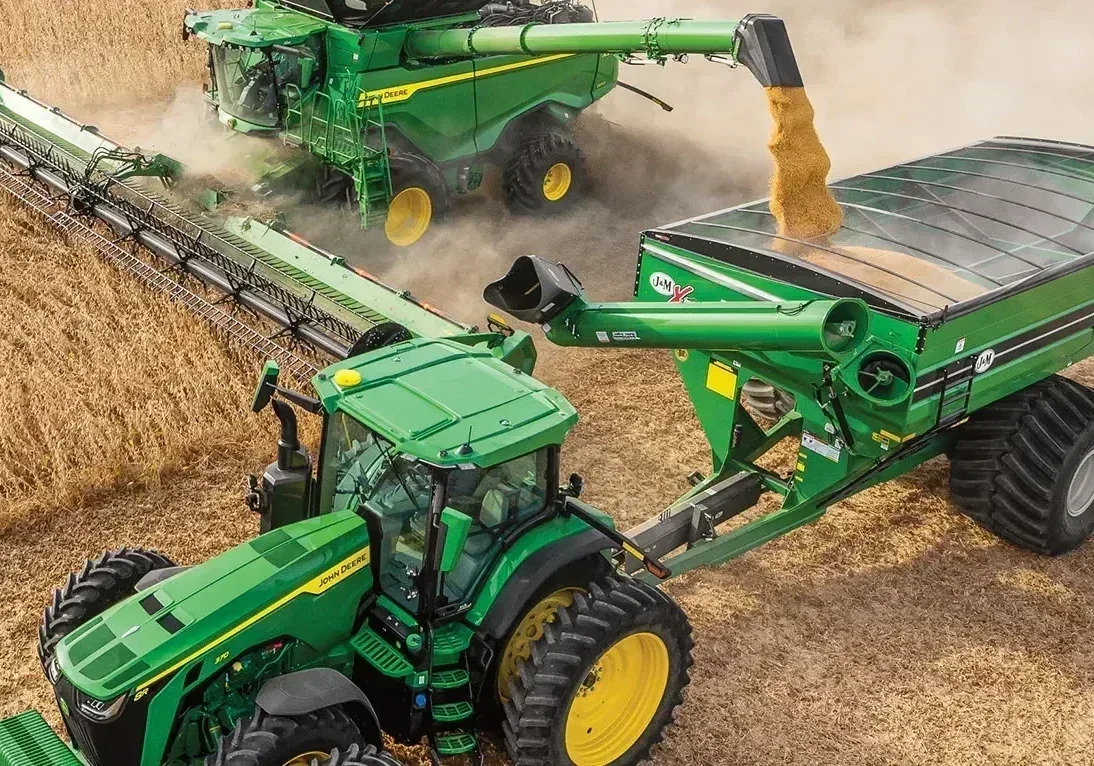
Leading farm equipment manufacturer approves use of B30 in time for fall harvest
ST. JOHNS, Michigan (Sept. 18, 2025) – The Michigan Advanced Biofuels Coalition (MiABC) applauds a recent announcement by John Deere that paves the way for increased use of biodiesel in Michigan and across the country. The leading farm equipment manufacturer now approves use of B30 biodiesel blends in all its Tier 4 John Deere Power Systems engines ─ a 10% increase over the previously approved B20 biodiesel blend. B30 is also approved for use in Tier 4 engines in John Deere construction equipment.
As part of its long history of supporting renewable fuel use, John Deere also previously approved use of RD100 renewable diesel in Tier 4 engines and blends up to B100 for all Tier 3 and Tier 2 engines.
Tier 4 engines incorporate the latest exhaust aftertreatment technology designed to reduce harmful particulate matter and nitrogen oxides. Using B30 in Tier 4 engines takes emission reductions even further, reducing hydrocarbons and greenhouse gases.
“Allowing use of B30 biodiesel fuel in John Deere equipment is good news for Michigan farmers and Michigan’s rural communities, especially as we head into the fall harvest season,” says Hanna Campbell, managing director of MiABC and market development director for the Michigan Soybean Committee. “Fueling tractors and combines with B30 leads to smoother engine operations and fewer carbon emissions for a cleaner, healthier environment.”
B30 is a blend of 30% biodiesel and 70% petroleum diesel fuel. Biodiesel is made from renewable sources like soybean oil, used cooking oil and other fats and oils that are readily available in Michigan. Biodiesel adds value to soybeans grown by Michigan farmers by providing a market for soybean oil, a byproduct of soybean meal processing.
“Biodiesel is an ideal fuel choice for farm equipment because it is made from crops grown right here on our farms. We at Michigan Soy are excited to see higher blends, like B30, approved for agricultural equipment and look forward to utilizing these blends during harvest this fall,” says Mark Senk, Owosso, Michigan, farmer and president of the Michigan Soybean Committee.
“At John Deere, we’re committed to supporting and growing the use of renewable fuels in our equipment,” said Pierre Guyot, senior vice president of John Deere Power Systems. “We believe strongly in the role that renewable fuels play in supporting the agriculture economy and are excited to offer our customers – including those who grow the very crops used to make renewable fuels – the opportunity to leverage higher blends of fuels like biodiesel in their own equipment.”
Michiganders benefit when diesel equipment operators fuel with higher biodiesel blends like B30, Campbell says.
“With 1 billion gallons of diesel fuel used annually in Michigan, there is significant potential to improve our quality of life by replacing petroleum diesel with biodiesel,” she says. “Furthermore, biodiesel contributes to the state’s economy — building revenue and creating jobs through biodiesel production, distribution and sales.”
For more information about biodiesel visit miadvancedbiofuels.com.
About Michigan Advanced Biofuels Coalition
Founded in 2022 by Michigan Soybean Committee (MSC) and the Michigan Soybean Association, MiABC works to increase understanding and adoption of biodiesel and other advanced biofuels produced from renewable resources such as soybean oil.
Other MiABC stakeholders include transportation providers, fuel suppliers, non-profits, private companies and community-focused groups. By joining the coalition, these organizations signal their commitment to improving Michigan communities through heightened energy security, cleaner air and a healthier environment. Funding for MiABC comes from Michigan farmers through the soybean checkoff program. For more information about biodiesel and MiABC, visit miadvancedbiofuels.com.
About Michigan Soybean Committee
The Michigan Soybean Committee (MSC) manages the investment of checkoff dollars on behalf of the 12,000+ soybean farmers in Michigan to increase their return on investment while enhancing sustainable soybean production. MSC is governed by the rules of a federally mandated checkoff program and led by a 7-member governor-appointed board of directors. Checkoff investments are used to research, educate and develop market opportunities for soybeans.